Clearing the Stockpile: How Brownsville, TX Took Control of Its Tire Problem
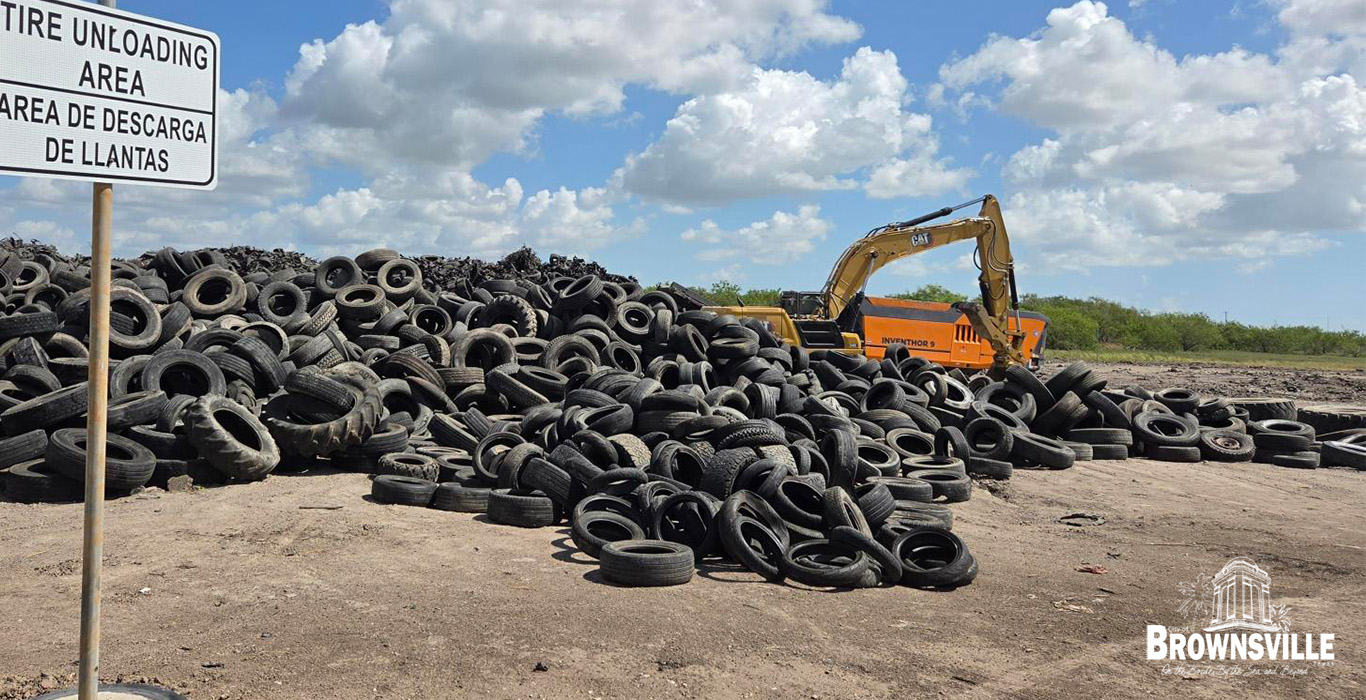
With a Doppstadt Inventhor 9 shredder and a team that takes ownership, the City of Brownsville turned a growing waste challenge into a program other municipalities depend on.
Jose Roberto Maldonado, Environmental Compliance Manager for the City of Brownsville Engineering-Public Works Department, did not set out to run a tire shredding operation. He came up through community outreach, organizing cleanup events under programs like Don’t Mess with Texas and Keep Brownsville Beautiful. That work pulled him into solid waste, and solid waste pulled him to the landfill. Sixteen years later, he oversees capital improvement projects, cell construction, compliance, and the equipment that keeps one of South Texas’s most active waste processing facilities running.
The tire program he manages has been running for more than 20 years. What changed recently was the machine at the center of it.
A Program Built on Demand
The City of Brownsville operates its tire processing facility within the permitted section of its landfill. Tires arrive from residents, city cleanup events, and neighboring municipalities throughout the Rio Grande Valley. On a strong month, the facility processes close to 25,000 tires. The site can process up to 300,000+ tires per year under the current operating schedule. At full capacity, the operation can shred more than 1,000 tires per day.
The stream is not uniform. Passenger tires make up the majority of the volume, but the facility also accepts tires from semi-trucks and agricultural equipment. Every load gets a visual inspection at the scale house before it is directed to a designated stockpile area. Before the tires reach the shredder, the operator makes a second pass with an excavator to pull any rims or unauthorized material. The machine stays protected. The process stays consistent.
The Old Machine Was Getting Expensive
Brownsville had operated an older shredder for years. It managed the work, but as the machine approached the 10-year mark, repair costs started climbing. The team kept it running while they evaluated what would come next.
Maldonado’s criteria were specific. The replacement machine had to handle any type of tire that came through the gate. It had to be low speed and high torque. For a tire shredding application, that combination matters. Low speed reduces friction and heat generation, which directly reduces fire risk. High torque means the machine pushes through tough material without bogging down or requiring repeated passes.
“We don’t want to overkill it,” Maldonado said. “So, for this shredder specifically, it was important that it was a low-speed machine that could minimize the risk of any fires and manage any tire.”
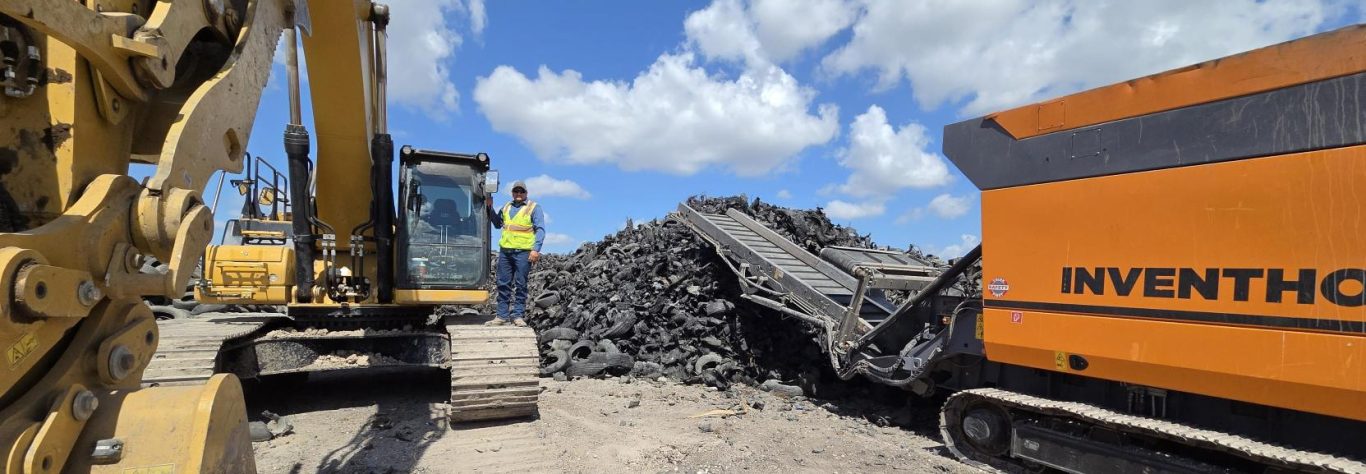
The Doppstadt Inventhor 9 fit that requirement. Its VarioDirect Drive delivers continuous power under a full load, and the single-shaft slow-speed design is built precisely for the kind of difficult, variable material a municipal tire program generates.
A Milestone Worth Documenting
The Inventhor 9 has been running at the Brownsville site since September 2025. In that time, the results have been clear.
About a month before this interview, Equipment Operator III Juan Trevino sent Maldonado a photo. The passenger tire stockpile was gone. For Trevino, a man who started his career picking up windblown paper and worked his way up through fueling and servicing equipment, it was a moment that reflected just how far both he and the program had come.
“We were able to shred all the passenger tires. Now we’re moving forward to tractor tires. It has been a good experience,” Maldonado said.
The impact goes beyond the stockpile. The city’s health department now coordinates directly with the landfill during cleanup events. Tires collected from roadsides and waterways are brought to the facility, separated, and shredded. With hurricane season a standing concern along the Texas Gulf Coast, keeping tires out of drainage channels and low-lying areas carries real public safety weight.
Financially, the math is straightforward. Outsourcing tire disposal or shipping tires off-site carries a significant per unit cost. Processing them in-house with reliable equipment eliminates that expense. “It’s pretty much paying for itself right now,” Maldonado said. “The machine by not outsourcing the tires.”
A Regional Resource
Brownsville does not just solve its own problem. Neighboring cities in the Rio Grande Valley bring tires to the facility as well. For communities without a permitted processing operation of their own, Brownsville’s program offers a legal, accessible disposal option that keeps tires out of illegal dump sites.
The facility’s operating permit allows 24-hour, seven-day operations if demand requires it. For now, the regular schedule manages the volume. But the infrastructure is in place to grow.
People First
Maldonado is deliberate about how he talks about the operation. The equipment matters, but he comes back to the person running it.
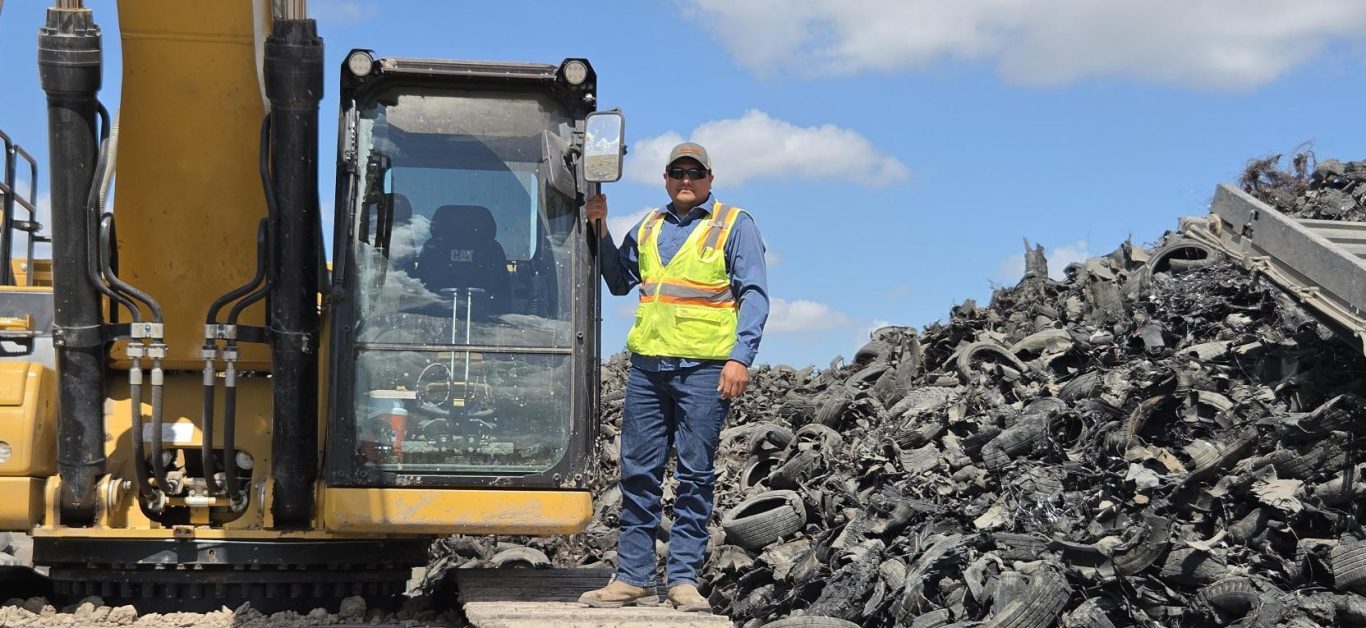
One operator, Juan Trevino, runs the Inventhor 9 day-to-day. Since the machine arrived, Maldonado has watched that employee’s approach to the job shift. The reliability of the equipment changed the work. The operator takes ownership. He sets goals. He tracks the stockpiles and pushes to clear them.
“The city runs on people, purpose, and projects. People are first,” Maldonado said. “Taking care of our guys is going to pay out.”
When the passenger tire stockpile was finally cleared, city management took notice. It was the kind of result that speaks for itself.
Service You Can Count On
Brownsville sits at the southern tip of Texas, which can be some distance from the nearest service provider. For a municipality running critical waste infrastructure, that service relationship is serious.
Maldonado credits dealer partner McCourt Equipment and the Ecoverse team for making that distance manageable. When an issue comes up, a call gets answered. Service gets scheduled. The communication has been consistent from the initial evaluation through day-to-day operations.
“It has been a good team between Ecoverse, McCourt, and the City of Brownsville,” Maldonado said. “Knowing that you can just pick up the phone and call McCourt for anything you need. That is a positive feeling.”
The Bottom Line
Twenty years into a tire program, Brownsville did not settle for patching an aging machine. It evaluated what the operation actually needed, chose equipment built for the application, and put the right person in place to run it.
The stockpiles are shrinking. The neighboring cities have somewhere to bring their tires. And the day the last passenger tire was shredded, the operator made sure Maldonado knew about it.
That is what compliance and capacity and the right equipment actually look like.
“It is assisting us and helping us stay in compliance and meet the demand. As the city is growing very fast, we saw that trend in the tires. The choice we made worked out not only for our management side, but also for the operator.”
— Jose Roberto Maldonado, Environmental Compliance Manager