Case Study Update: Catalyst BioAmendments

When we first featured Catalyst BioAmendments in 2021, the Nevada City, CA company was already known for producing exceptionally high-quality, microbe-focused compost and for challenging assumptions about what compost at scale could cost and achieve.
Since then, Catalyst hasn’t pivoted away from that mission – they’ve expanded it.
This follow-up case study explores how Catalyst has evolved since we first profiled the company, building on a proven composting model while widening its impact through education, on-farm support, and a continued commitment to biology-first systems.

Evolution Since the Original Case Study
The biggest shift since 2021 has been where Catalyst sees the true constraint in regenerative agriculture.
“Over time, it became very clear to us that while the product matters deeply, the real bottleneck is producers,” says founder Keisha Ernst. “If we want healthy soils at scale, we need skilled compost makers all over the world, not just one company producing compost.”
That realization led to the launch of Compost Academy, Catalyst’s dedicated education platform focused on teaching composting through a microbial lens. Offered both online and in person, the Academy represents a strategic evolution: moving from being solely a producer of high-quality compost to becoming a catalyst for capable producers everywhere.
If the original case study proved that microbe-focused compost could be made affordably and consistently, Catalyst’s latest chapter is about making sure many others can do it too.
Expanded Services: Bringing Compost Production On-Farm
Catalyst continues to produce and sell compost, primarily for growers who use it to make teas and extracts rather than applying it directly. What’s new is how closely the team now works with farmers on their own land.
Catalyst now travels with its compost turner to help farmers design and build compost systems on-site and tailored to local materials, climates, and goals.
“Supporting on-farm production has become a natural extension of our work,” Keisha explains.
This approach allows farmers to localize fertility, reduce dependence on outside inputs, and gain confidence in their own composting systems, all while drawing on Catalyst’s experience.

A Shifting Customer Base and Growing Demand
Since the original case study, Catalyst’s customer base has shifted toward larger-scale farmers. Many are not certified organic but rising synthetic fertilizer costs have accelerated interest in biological alternatives.
“Demand has grown steadily each year as more people begin to understand that soil is alive,” says Keisha. “That awareness changes everything.”
Catalyst helps bridge the gap between conventional and regenerative systems by pairing familiar agronomic tools like soil chemistry, plant tissue testing, and sap analysis with direct observation of soil biology under the microscope. This combined approach makes it easier for growers to reduce synthetic inputs and replace them with organic ones with confidence rather than guesswork.
Long-Term Equipment Performance: BACKHUS A30
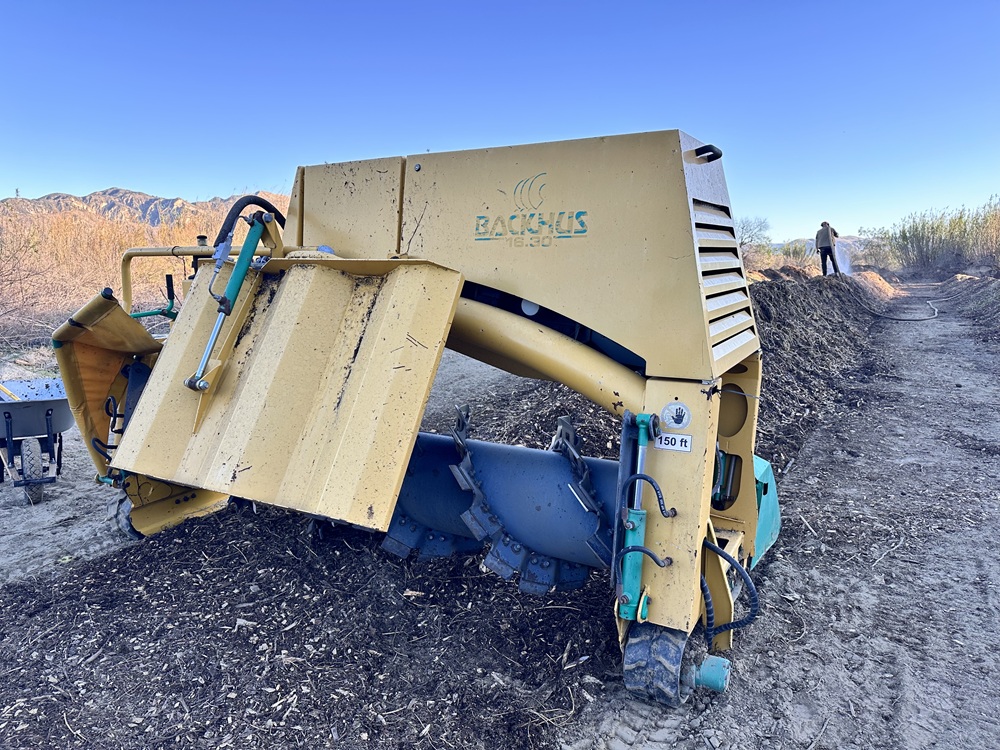
Catalyst has continued operating its BACKHUS 16-30 (redesignated the A30 since the original case study) and its performance has remained consistent.
“It is still a great machine,” Keisha says simply.
Maintenance follows a standard, disciplined schedule. The most significant service event over several years involved replacing both tracks; one of which failed mid-turn on a hot compost pile while working in Florida but Ecoverse helped Catalyst source the correct replacement locally.
“That support mattered to us,” Keisha recalls. “They prioritized getting us back up and running rather than forcing a purchase through their own supply chain, which is rare and appreciated.”
That experience reinforced Catalyst’s confidence not just in the machine, but in the support behind it.
Reliability, Trust, and Biological Integrity
Reliability plays a critical role in Catalyst’s ability to operate efficiently and work in diverse locations.
“We trust the machine,” says Keisha. “We trust that we can take it anywhere and accomplish our goal. And we trust that if something breaks, we will have real support.”
For Catalyst, the BACKHUS advantage goes beyond uptime. The blade pattern remains a defining feature.
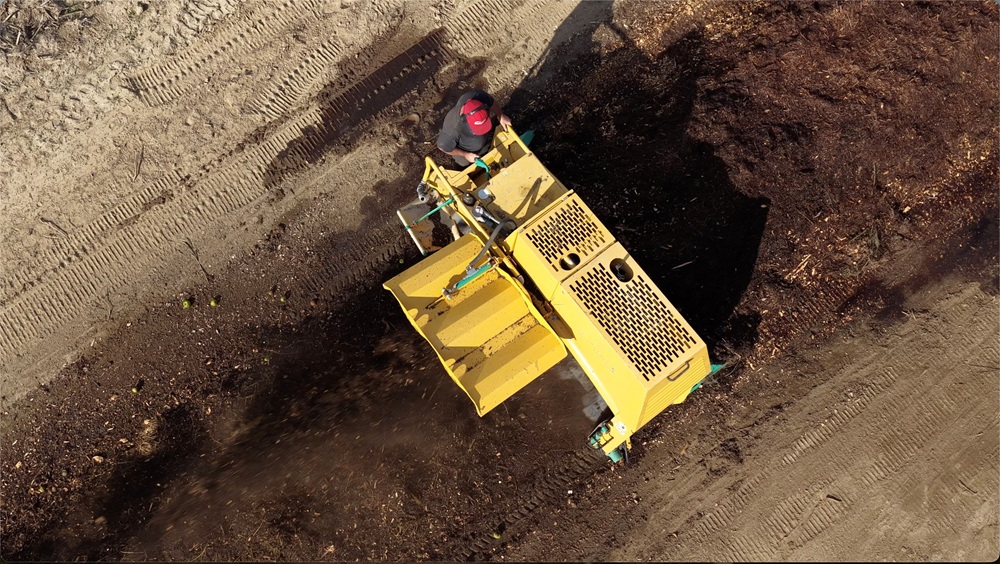
“If you are working with microbes, it is the best turner on the market,” Keisha explains. “Many turners act like blenders, chopping and shredding material. BACKHUS turners are much gentler, which matters when biology is the priority.”
Efficient use of space is another ongoing benefit, particularly as Catalyst operates in very small spaces where every foot counts.
Feedstock: A Persistent Challenge and Opportunity
One challenge highlighted in the original case study remains unresolved: sourcing clean, organic feedstock at scale.
“Sourcing remains one of our biggest challenges,” Keisha notes. “Much of the woody material in our region is shipped out of county to be burned at power plants, often at taxpayer expense.”
Creating local, circular systems for organic inputs remains both Catalyst’s biggest hurdle and one of its greatest opportunities for long-term impact.
Consistent Quality Through Context-Driven Process
Catalyst’s compost quality has remained consistently high over the years; not through rigid formulas, but through thoughtful adaptation.
“Any time we move to a new location or work with new input materials, we adjust our process thoughtfully,” Keisha says. “Context always matters in composting.”
Microscopy remains the primary evaluation tool, with occasional DNA testing adding another layer of insight.
“It adds another layer of understanding,” Keisha notes. “And it’s always fascinating to observe.”
Education as a Long-Term Commitment
Education was already central to Catalyst’s business in 2021. Since then, it has become a dedicated pillar.
Compost Academy has been operating for just over a year and now runs nearly continuously, offering live programs, self-paced courses, and free webinars.
“The biggest shift has been bringing students closer and working with them over months instead of just a few days,” Keisha explains. “Longer programs allow for deeper learning and more individualized support.”
That extended engagement has transformed the student experience.
“It feels more like a growing team than a classroom,” she says.
Catalyst’s educational reach is now global, with consistent participation from students around the world.
Catalyst’s Evolving Role in the Industry
From the beginning, Catalyst set out to prove that microbe-focused compost could be produced at scale without prohibitive costs.
“We started Catalyst because we could not find compost at scale that met our standards for less than two thousand dollars per yard,” Keisha says. “We proved it could be done for less than half that cost while maintaining quality.”
Now, Catalyst’s role is shifting.
“At this point our role is less about producing all the compost ourselves and more about setting a bar, sharing what we’ve learned, and helping this work spread everywhere,” she says.
The goal is for microbe-focused composting to take root as its own industry, whatever name it ultimately carries.
Looking Ahead
In the coming years, Catalyst is partnering with Apricot Lane Farm to integrate biodynamic preparations into its composting process, comparing those windrows to Catalyst’s standard approach with renewed DNA analysis.
“There are many small, exciting dreams in motion right now,” Keisha says.
What hasn’t changed since the original case study is the foundation: a commitment to biology, practical systems, and empowering producers.
“When someone learns enough to do it themselves, we celebrate that,” Keisha adds. “Power to the farmer.”
If you are a compost producer, there are no better turners than BACKHUS and Ecoverse provides the best environmental processing machinery to the North American market, including a complete lineup of BACKHUS compost turners to help you transform waste into revenue. We can help you do something amazing: create something from nothing by converting waste products into sellable goods. Plus, do it more efficiently or faster. Simply put, Ecoverse helps you do more things, and do them better so your operation can achieve unprecedented levels of production and profitability.
Want to learn how we can help your organization do more, better? Contact us!