What’s the Difference Between a Jaw Crusher and an Impact Crusher?

Introduction
If you’re in the market for a crusher, you might be stuck in a “should I get a jaw crusher or an impact crusher?” decision. While both machines reduce large materials into smaller pieces, they do so in very different ways. Whether you’re working with rock, concrete, or construction and demolition debris, understanding how each machine works can help you make the best choice for your business. We break it down in simple terms to help you make the best decision for your operation.
How Does a Jaw Crusher Work?
Think of a jaw crusher as a powerful nutcracker. It has two metal “jaws” – one is stationary while the other moves back and forth to crush whatever gets between them. Jaw crushers are tough, simple, and great for breaking down hard materials.
Key Features of Jaw Crushers:
- High crushing efficiency: Ideal for primary crushing of hard materials.
- Simple structure: Fewer moving parts mean lower maintenance costs.
- Produces uniform, coarse output: Good for applications requiring a consistent, larger size.
- Best for hard, abrasive materials: Handles rock, granite, and ores effectively.

How Does an Impact Crusher Work?
An impact crusher, sometimes called an impactor, works differently—it uses high-speed impact forces to shatter material. Inside, a fast-spinning rotor fitted with hammers or blow bars hurls materials against a hard surface, breaking them apart on impact. This results in finer, more varied material sizes.
Key Features of Impact Crushers:
- Higher reduction ratio: Produces finer and more uniformly sized materials.
- Great for softer materials: Works well with limestone, concrete, and asphalt.
- More versatile in shaping materials: Ideal for producing aggregate for road construction.
- Higher wear and maintenance costs: Moving parts experience more stress.
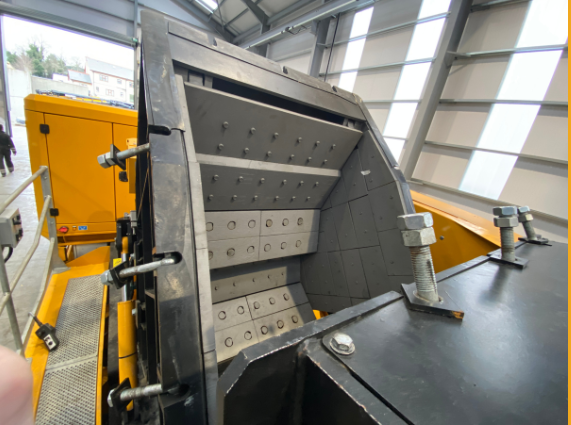
Comparing the Two Crushers
| Jaw Crusher | Impact Crusher | |
| Crushing Style | Squeezing | Smashing |
| Best for | Hard rocks, granite | Softer materials, concrete |
| Output | Coarse, even pieces | Fine, varied sized pieces |
| Maintenance | Low | Higher due to moving parts |
| Cost | Lower operational costs | More expensive upkeep |
Which One Is Right for You?
- Choose a jaw crusher if you’re processing hard materials and need something durable.
- Choose an impact crusher if you’re working with softer materials and want a finer end product.
Conclusion
The choice between a jaw crusher and an impact crusher depends on the type of material you need to process, the final product size required, and your budget for maintenance and operational costs. Both crushers have their place in material processing and the choice isn’t always either-or; sometimes your operation needs both types of crushers. If that’s the case, we’ve got you covered with jaw crushers and impact crushers from ROCO, featuring patent-pending dual-power hybrid diesel-electric technology that lowers your operational cost compared to diesel-hydraulic machines.
Ecoverse provides the best environmental and aggregate processing machinery to the North American market, including a complete lineup of machinery to help you transform waste into revenue. We’ve been selling the best engineered and made trommel screens for two decades, and we can help you do something amazing: create something from nothing by converting waste products into sellable goods. Plus, do it more efficiently or faster. Simply put, Ecoverse helps you do more things, and do them better so your operation can achieve unprecedented levels of production and profitability. Want to learn how we can help your organization do more, better? Contact us!